Trading with the 'Enemy'?
On October 7, 2023, Muhammad Deif, a martyred hero leader in the Palestinian resistance, launched Operation Flood of Al-Aqsa. This wasn’t just a military action. It was a call for help that reached across borders to over 50 countries and more than two billion people in the Arab and Islamic world. Deif asked for demonstrations, sit-ins, and pressure on governments to support Palestinians who were fighting against oppression.
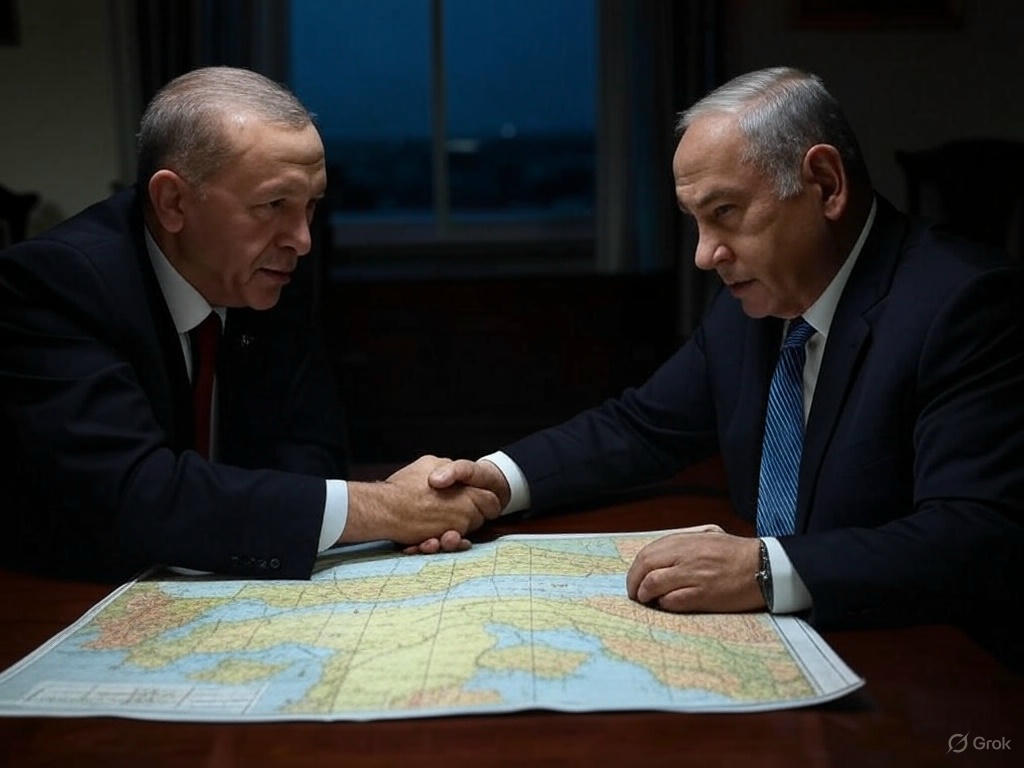
The dust has not settled yet, and the response has been disappointing. Instead of united support, what emerged is a mix of empty words and contradictory actions. Many Arab and Islamic countries speak against Israel publicly while quietly maintaining or even strengthening their ties with it. This article looks at the weak response to Deif’s call, explains what I call “formal hostility,” and examines how countries like Turkey and Qatar say one thing but do another when it comes to Israel.
Limited Response to the Call for Support
Deif’s appeal reached out to twelve specific Arab and Islamic countries: Lebanon, Iran, Yemen, Iraq, Syria, Jordan, Egypt, Algeria, the Arab Maghreb (Tunisia, Morocco, Libya, and Mauritania), Pakistan, Malaysia, and Indonesia. Beyond these, his message extended to over 50 Islamic nations. He wasn’t asking them to join the fight directly - he wanted public protests, diplomatic pressure, and actions against enemy embassies to support Palestinians at a critical moment.
The response fell far short of expectations. Only four countries—Lebanon, Yemen, Iraq, and Iran—provided real, tangible support. They launched missile and rocket attacks on Israeli targets and American military bases in the region. Some groups along the Syrian-Iraqi border also targeted American bases in Syria. But this support came from less than 40% of the countries Deif specifically called on.
Even more telling is that these supportive countries represent only 10% of the population Deif addressed. The other 90% - nearly two billion people - stood by and watched. Many just shared social media posts or expressed brief sadness without taking any meaningful action. This led to accusations of betrayal and finger-pointing among Arab nations.
For most people outside the conflict zones, the war in Gaza became something they watched on screens. They might share a sad emoji or video of destruction, but their digital sympathy rarely turned into boycotts, protests, or political pressure that could actually help Palestinians. The struggle became just another tragedy to scroll past on social media.
This lack of real support stems from deeper issues in the Arab and Islamic world. Historical conflicts, political rivalries, and economic ties have created a situation where unified action is hard to achieve. For those not directly involved in the conflict, life goes on as normal. They experience momentary sadness when seeing images from Gaza, but then quickly return to their daily lives. The gap between the 10% who actually helped and the 90% who just watched shows how challenging it is for Palestinians to gain meaningful support.
Formal Hostility
There’s a big gap between what many Arab and Islamic states say about Israel and what they actually do. This is what I call “formal hostility” - when countries loudly condemn Israel in speeches and media but take actions that actually help Israeli interests. It’s not just hypocrisy but a calculated position that has become common in the region.
Historically, opposition to Israel among Arabs wasn’t just talk - it was real and active. From 1948 to 1978, this opposition led to concrete actions. Armies fought, volunteers joined the cause, and communities organized protests to pressure even the most reluctant governments to support Palestinians. The very idea of Israel existing on Arab land was met with strong resistance to normalization.
A major shift happened when Egyptian President Anwar Sadat signed the Camp David Accords in 1978. After visiting Jerusalem, Sadat shook hands with Israeli leaders and signed a peace treaty despite widespread Arab opposition. Sadat didn’t try to eliminate hostility toward Israel completely. Instead, he reframed it. He promoted peace and prosperity, arguing that Egypt had done enough for Palestine and needed to focus on its own development.
This marked the beginning of “formal hostility” as we see it today. Sadat’s approach treated Israel as an unpleasant but unavoidable neighbor. The message was: Israel exists, we don’t like it, but we’ll deal with it when necessary. As Israel continued its expansionist policies, this formal hostility spread across the Arab world, especially after the Oslo Accords in the 1990s. By the time of the Madrid negotiations and after the Gulf War, many regimes had established direct or indirect relations with Israel while still talking tough in public.
Formal hostility is when leaders call Israel an enemy in their speeches while their actual policies align with Israeli interests. It’s a calculated balance between appeasing public opinion and dealing with political and economic realities. In Lebanon, for example, many politicians loudly oppose Israel in public but work against their own resistance movements in practice, often following American and Israeli directives. Formal hostility isn’t just government policy - it’s a social condition where words and actions don’t match, undermining the very resistance they claim to support.
Case Studies: Turkey and Qatar
To understand how formal hostility works in practice, let’s look at Turkey and Qatar. Both countries present themselves as enemies of Israel and supporters of Palestinians, but their actions tell a different story.
Turkey: Economic Ties Over Political Rhetoric
Turkey is a perfect example of formal hostility. President Recep Tayyip Erdogan often criticizes Israel harshly in public. He famously confronted Israeli President Shimon Peres at the 2009 Davos Forum and strongly condemned Israel after the 2010 Mavi Marmara incident when Israeli forces killed nine Turkish aid workers trying to break the Gaza blockade. During the 2014 Gaza aggression, Erdogan even said Israel was worse than Hitler.
But behind this tough talk lies a strong economic relationship. Between 2011 and 2022, Turkey tripled its exports to Israel from $2.3 billion to $7.03 billion, becoming Israel’s fifth largest supplier. Turkey exports steel, iron, textiles, cars, cement, and crucially, Azerbaijani oil. Through the Baku-Tbilisi-Ceyhan pipeline, Turkey supplies about 40% of Israel’s annual crude oil needs. The Turkish Zorlu Group also provides 7% of Israel’s electricity.
Even during the recent war following the Al-Aqsa Flood operation, Turkey’s economic support for Israel continued. Oil tankers kept leaving the Turkish port of Ceyhan for Israel despite public statements suggesting trade had stopped. Agricultural products flowed to Israeli ports like Haifa. Most disturbing was the continued export of military supplies—including gunpowder, explosives, ammunition, and weapons parts—directly supporting Israel’s military during its attacks on Palestinians. Reuters reported in October 2024 that Turkish exports to the occupied West Bank increased by 526%, a way to disguise goods being sent to Israel.
This economic relationship completely contradicts Turkey’s public statements. While Erdogan criticizes Israel loudly, Turkish products help expand Israeli settlements that displace Palestinians. When protests occur against Israeli ships in Turkish ports, the government increases security to protect trade rather than stop it. Turkey didn’t halt Azerbaijani oil exports to Israel even during the attacks on Gaza. These economic ties aren’t just normal trade - they’re deliberate choices that prioritize money over solidarity with Palestinians.
Qatar: Dual Policies and Regional Influence
Qatar also demonstrates formal hostility, marketing itself as a strong supporter of Palestine while maintaining practical relations with Israel. Qatar hosts leaders of Hamas and portrays itself as a mediator in the Israeli-Palestinian conflict. It regularly condemns Israeli actions and provides financial aid to Gaza, positioning itself as a voice for Palestinian resistance globally.
But a closer look reveals a two-faced policy. Qatar normalized relations with Israel 29 years ago, establishing ongoing trade and investment ties. Qatar’s sovereign wealth fund invests in Israeli technology companies, especially in artificial intelligence and cybersecurity. Israeli companies operate in Qatar, and during the 2022 FIFA World Cup, Israeli journalists were allowed entry despite Qatar’s official stance against normalization. Less than two months after the Al-Aqsa Intifada began, a photo showed Israeli President Isaac Herzog meeting with Qatar’s Emir Tamim bin Hamad Al Thani at the Climate Summit in Dubai, even as the violence in Gaza continued.
Secret documents have revealed Qatar’s financial dealings with Israeli leadership. Between 2012 and 2018, Qatar gave grants totaling $65 million to Benjamin Netanyahu’s office, including a $15 million grant in 2012 and a $50 million grant in 2018, delivered in cash through Qatar’s State Security Agency. Former Israeli Foreign Minister Tzipi Livni claimed Qatar funded Netanyahu’s election campaign with $3 million. While Qatar’s aid to Hamas is often cited as proof of its support for Palestine, this aid is provided with Israel’s approval and sometimes encouragement, suggesting a coordinated effort to manage rather than resolve the conflict.
Qatar’s approach to Israel is driven by its pursuit of regional influence. A 2020 research paper by the Israeli Institute for Regional Foreign Policy noted that Qatar uses the Palestinian issue as a tool to enhance its standing in the region. The humanitarian crisis in Gaza has actually provided a way for Qatar and Israel to align their interests, with Qatar acting as a mediator for Israeli initiatives. This dual approach—supporting Hamas while engaging with Israel—shows how formal hostility works, where public support for Palestine masks actions that maintain the status quo.
Final Thoughts
The response to the Flood of Al-Aqsa operation has exposed a troubling reality in the Arab and Islamic world. While many countries talk tough about opposing Israel, few take meaningful action to support Palestinians. Muhammad Deif’s call for solidarity reached over 50 countries and two billion people, but only a small fraction responded - less than 40% of the directly mentioned nations and just 10% of the target population. The other 90% mostly watched from the sidelines, perhaps sharing social media posts but doing little else as Gaza suffered.
This isn’t just a policy failure - it’s a betrayal of the principles of justice and solidarity that Deif called for. The limited response from Lebanon, Yemen, Iraq, and Iran highlights how isolated the Palestinian resistance is, surrounded by empty words but little real support. For Palestinians enduring bombs, blockades, and displacement, social media sympathy offers little comfort. Their struggle needs action, not just words.
For real change to happen, Arab and Islamic countries must move beyond formal hostility. They need to match their actions with their words, putting Palestinian needs above economic and strategic interests. This means building unity that overcomes historical divisions and political rivalries. Opposing Israel can’t just be a show to please domestic audiences - it must translate into policies and practices that challenge oppression and support freedom. Only then can Deif’s call be truly answered, not with empty promises or social media posts, but with unified action that honors Palestinian sacrifices. Until that day comes, formal hostility will continue to highlight the gap between what is said and what is done in the face of injustice.
Comments powered by Disqus.