Has the West Bank Failed Gaza?
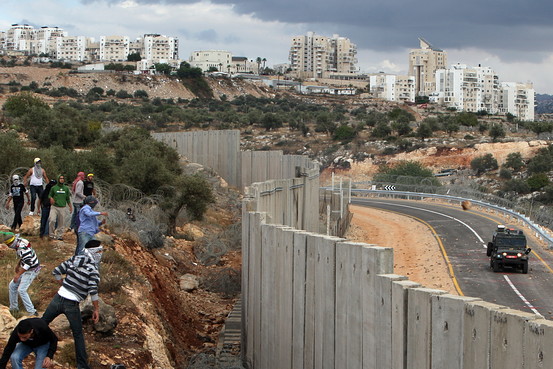
Since Trump returned to the White House on January 20, 2025, much attention has focused on his statements about displacing Gaza residents to Egypt and Jordan. But while we’re distracted by this, another dangerous plan is unfolding in the West Bank - one that could be just as harmful as the Gaza displacement plan.
Trump’s pressure to displace people from Gaza might actually be aimed at achieving Israel’s goals in the West Bank. When Operation Al-Aqsa Flood was announced on October 7, 2023, the West Bank was mentioned twice - first as one reason for the battle (Israel’s exploitation of the area), and second in a call for West Bank youth to attack settlements and show their commitment to Palestine.
After this declaration, resistance leaders in Gaza repeatedly called for action in the West Bank. But for 18 months, Gaza and its supporting fronts remained the main battlefield. After the ceasefire in Gaza, attention shifted to the West Bank, particularly to document the liberation of Palestinian prisoners.
This brings us to a common question: Has the West Bank failed Gaza? Or more accurately, has the West Bank failed itself? Where is the West Bank in the Al-Aqsa Flood? Simple yes or no answers don’t capture the complex reality. We need to avoid both sugarcoating the situation and undermining the efforts of those resisting under unprecedented pressure.
West Bank: A Fragmented Reality
The first problem with this question is defining what we mean by “the West Bank.” Many people outside Palestine don’t realize there isn’t just one West Bank - there are multiple realities within it, each with different political, social, and economic conditions.
The West Bank today contains at least two contradictory realities living side by side.
The first is the “Oslo reality” - population centers where people live by avoiding confrontation with Israeli forces and expanding settlements. The most notable example is Ramallah, the would-be capital of a Palestinian state project approved by Israel. Life here revolves around bank loans and dealing with the Palestinian Authority (PA), which manages daily affairs and cooperates with Israeli forces when they decide to enter these areas.
Even within this bubble, some young people resist, but they face three types of repression: from Israeli forces, from the PA, and from social pressure that sees individual survival as the only way to remain on the land, even temporarily.
Meanwhile, much of Ramallah’s population is caught up in the statehood drama, similar to much of the Arab world. At the same time, there are camps, neighborhoods, and villages that have been invaded, bombed, displaced, and besieged for over twenty years. These areas have been engaged in organized armed battles for a decade, sacrificing many martyrs to defend their land.
This resistance is visible in the Palestinian brigades in Jenin, Tulkarm, and other areas that supported Gaza through operations against Israeli checkpoints, outposts, and settlements. One example is the Tayaser checkpoint operation on February 4, when a Palestinian fighter attacked an Israeli checkpoint and military base, killing two Israeli soldiers and wounding eight others.
That same day, Israeli forces blew up dozens of homes in Jenin refugee camp, attempting once again to eliminate resistance there. This wasn’t the first such attempt - it’s part of a 23-year campaign. After the Al-Aqsa Flood operation and after the Gaza ceasefire, various West Bank areas faced Israeli airstrikes and ground attacks aimed at crushing resistance.
Consider these numbers: from the start of Al-Aqsa Flood until the Gaza ceasefire, over 800 people were killed in the West Bank by Israeli gunfire, airstrikes, drone strikes, and settler attacks. During this same period, more than 10,000 Palestinians from the West Bank and Jerusalem were arrested. Anyone suspected by Israeli forces or the PA of resistance activities is either hunted down, killed, or imprisoned.
While Israel was carrying out its genocide in Gaza, the PA launched a major military campaign against resistance groups in Jenin, repeating Israeli propaganda that demonizes these groups. However, PA forces soon withdrew, and Israeli forces attacked Jenin and other camps, displacing more than 30,000 civilians before the end of January 2025. Yes, this is displacement happening in the West Bank, not Gaza.
In the West Bank, two opposite worlds exist side by side: one that surrenders to Israel’s project and believes ignoring the violence offers a chance for survival, and another that resists with minimal resources under the world’s largest surveillance and monitoring network.
Oslo and Beyond
Many factors have split the West Bank into these two worlds, but the Oslo Accords remain the most significant, along with the earlier Camp David Accords between Egypt and Israel. The Oslo Accords distorted Palestinian priorities, as we explained in an earlier article about the Palestinian Authority.
This context helps us answer the question fairly: Has the West Bank failed Gaza? Has the West Bank failed itself? Knowing the complex reality, we can say: In the West Bank, some remain committed to betraying Palestine. Others are rebelling against this approach to support Palestine, Gaza, and themselves.
Strategic Importance of the West Bank
Resistance in the West Bank differs from other areas for many reasons. First is Israel’s intense focus on controlling it, as the West Bank represents the greatest strategic threat to Israel.
Geographically, the West Bank sits in the heart of occupied Palestine. The distance between its western border and the Mediterranean is less than 15 kilometers. The West Bank directly borders the Israeli Gush Dan region (Greater Tel Aviv), which contains the most populated Israeli settlements.
Gush Dan is the demographic, economic, and financial heart of Israel. This reality means Israel cannot be secure if it loses control of the West Bank. While Israel claims its strategic risks are a nuclear Iran or hostile Arab regimes that might attack in the future, the West Bank remains the primary existential threat to Israel - liberating it could put the entire Israeli project on the path to extinction.
Benjamin Netanyahu explained this danger in his 1953 book “A Place Among the Nations” (or “A Place Under the Sun”), where he outlined his vision of Israel’s geography, including the West Bank as its core. This isn’t just Netanyahu’s personal concern - it’s a cornerstone of Israeli security doctrine, which aims to keep the West Bank under occupation while working to make it part of “the Land of Israel.”
This is the project Israel is implementing with direct US support, as shown by Trump’s statements before and after his re-election. The West Bank issue is fundamentally linked to how Israel views itself, its future, and its security - and how the US views Israel.
The Siege
This explains why the West Bank has been under siege throughout the conflict. Some people might be surprised we call it a siege, since the most obvious and brutal siege is on Gaza. The West Bank does have food, water, imports, and exports, but it lacks the most important thing Palestinians need to survive - what we might call “Palestinian oxygen”: weapons.
This total siege on the West Bank is maintained by three parties:
- Israel (the Israeli military) from the north, west, south, within settlements, and inside the West Bank
- The Palestinian Authority from inside the West Bank
- The Jordanian regime from the east
Jordan’s role in this siege isn’t minor - it’s one of the key functions of the regime since its creation.
For example, on December 18, 2023, during the Al-Aqsa Flood War, the Jordanian Armed Forces announced they had stopped an attempt to smuggle automatic weapons and missiles after clashes with smugglers on the Syrian border. Before Al-Aqsa Flood, on August 16, 2023, the Jordanian Army reported shooting down a drone carrying explosives from Syria. Jordan won’t admit it’s preventing weapons from reaching the West Bank, instead using excuses about smugglers and drug dealers to justify its actions.
These examples are just the tip of the iceberg. Jordan’s primary function is to protect Israel’s eastern borders by preventing a resistance movement from developing in the West Bank and controlling interactions between West Bank Palestinians and their Arab neighbors.
Despite these efforts, some weapons did reach Palestinian fighters in the West Bank from Syria, with help from resistance forces as part of the project to arm the West Bank that Martyr Sayyed Hassan Nasrallah mentioned in his International Quds Day speech on April 13, 2023 - a project managed by Martyr Saleh al-Arouri.
There are other sources for weapons in the West Bank, but the arming project aims to build on the historical development of Palestinian resistance there. It seeks to transform individual acts of rebellion against Israel into an organized movement capable of ending the occupation and accelerating Palestine’s liberation.
Getting individual weapons for self-defense is one thing; introducing quality weapons to Palestinian resistance groups is another. Why would arming the West Bank pose an existential threat to Israel? Beyond geography and demographics, the biggest factor is the Palestinian resistance itself - the existence of a resistant environment and young people ready to fight and sacrifice. Without Palestinian fighters, all the weapons in the world wouldn’t help.
Reshaping Resistance in the West Bank
To understand this factor better, consider the political and social clashes happening in the West Bank since 2014. This conflict has two sides:
First is the agenda of Israel and its agents in the PA - to transform Palestinians into “good Palestinians” waiting for silent extermination.
Second is the remarkable will of individuals who rejected the Oslo doctrine and chose the path of Sheikh Izz al-Din al-Qassam without resources but with determination, awareness, and a message. They became seeds that grew into the organized and individual resistance we see today in the West Bank - the backbone of the project to arm the region.
These individuals participated in all forms of uprising against Israel when Palestinian society, especially in the West Bank, faced intense frustration and disconnection from the cause. Remember that in 2014-2015, Palestine was barely mentioned in news about conflicts in the Arab region. But these young people had different ideas.
People like Bassel al-Araj, Diaa al-Talahima, Muhannad al-Halabi, Omar Abu Leila, and dozens of heroic martyrs formed the foundation for reshaping resistance consciousness in the West Bank. Their stories became motivation for Palestinians everywhere and significantly impacted resistance movements across the region and world.
This transformation created a new resistance reality in the West Bank with unprecedented motivation, especially with the continuing battles in Gaza and South Lebanon. The ideal scenario would have built on this resistance, organizing and arming it to complete the “siege of Israel” with fighting fronts from the south, east, and north (Lebanon). The only side left for Israel would be the sea. Unfortunately, this scenario didn’t materialize.
One reason it failed is the Jordanian regime’s role in preventing the West Bank arming project. While Syria, Hezbollah, Iran, Hamas, Islamic Jihad, and others worked to deliver weapons to West Bank fighters, Jordan successfully blocked these weapons - without any pushback from the Jordanian people.
Every resistance fighter from the West Bank feels sad about Syria’s shift toward American influence, as this will inevitably tighten the siege on West Bank resistance.
Challenges and Threats to Resistance
What’s happening in Tubas, Jenin, Tulkarm, and all resistance areas in the West Bank is both important and dangerous. If the forces working to eliminate resistance continue their mission, they not only prevent resistance from growing but threaten to destroy it completely. Resistance is driven by faith and will, but it’s sustained by achievement and change. Suppressing achievements and turning them into losses is the biggest challenge to keeping the idea of resistance alive in collective consciousness.
We’re not saying this to discourage or demand more from West Bank resistance fighters, who are already performing miracles alongside those in Gaza. We say this to ourselves and everyone who believes in resistance, celebrates its achievements, and mourns its martyrs. It’s our duty to challenge the forces besieging West Bank resistance, especially the Jordanian regime and the dangerous PA.
These aren’t just theoretical ideas - they reflect the reality on the ground. Israel controls about 60% of the West Bank. This isn’t just security control (which covers almost the entire West Bank in some form) but actual territorial control. This means more than 3.5 million Palestinians living in the West Bank are forbidden from using or entering 60% of their land. This 60% is reserved for about one million Israeli settlers, dozens of military bases, roads, and closed military zones.
Israel appears to be including this 60% in the so-called “Land of Israel.” They need US recognition to legitimize this annexation. The danger is that annexation is already happening in practice, implying a project to slowly displace West Bank Palestinians, as several Israeli officials (most notably Finance Minister Bezalel Smotrich) have repeatedly stated - just as Trump threatens Gaza’s people.
If we just watch and don’t take practical steps to support our resistant brothers and sisters in the West Bank, it will end up as part of the “Land of Israel,” as Trump promises and as Israel has been working toward for decades, benefiting from the Oslo Agreement and the presence of the PA and Jordanian regime.
Insights from a Palestinian Journalist
I recently came across an interview with a Palestinian journalist who offered valuable insights into the West Bank situation. They discussed how, while attention focuses on Trump’s plans to displace Gazans, a significant plan is also developing for the West Bank. Currently, 60% of West Bank land is under Israeli control, serving less than one million settlers, while 3.5 million Palestinians are restricted to just 40% of the territory. Israel’s National Security Minister has even announced plans to encourage Palestinians to “emigrate voluntarily” from the West Bank.
The journalist raised a crucial question: Where would West Bank residents go? Jordan is the likely destination. They explained that Jordan has historically wanted Palestinians to stay in the West Bank - not out of concern for Palestinians, but because Jordan already has more Palestinians than native Jordanians, creating occasional tensions. Arab regimes around Palestine fear displacement not for Palestinians’ sake but to protect their own rule.
The journalist noted that in Jewish religious tradition, the West Bank holds more significance than cities like Tel Aviv or Haifa because it contains the ancient kingdoms of Judea and Samaria. This religious and strategic importance drives Israel’s determination to control the area. Israel works long-term, implementing policies that gradually change the environment - like laws allowing non-Arabs to buy West Bank land or expanding settlements as defense against potential attacks from the east.
They described how the West Bank has been broken into isolated areas by settlements and checkpoints, turning short journeys into hours-long ordeals. Palestinians face specific restrictions - bans on construction, limits on water wells, and even laws protecting wild thyme that can imprison Palestinians who collect it. These measures aim to gradually push Palestinians out over time through constant pressure on their daily lives.
Regarding resistance, the journalist noted its evolution from stone-throwing and stabbings to more sophisticated operations with shootings and explosives. They discussed Israel’s military campaigns, like the “Iron Wall” operation in the northern West Bank, which serve both political and military goals. Despite these efforts, resistance continues, often fueled by personal revenge and the cycle of martyrdom.
On the PA and Jordan’s roles, the journalist was sharply critical. They described the PA as acting like part of the occupation, undermining resistance by removing explosives meant for Israeli forces and suppressing demonstrations under the guise of security. Jordan protects Israel’s eastern borders by blocking weapons and support, a role tied to its establishment by Britain alongside Israel. The journalist doubted any serious resistance or liberation could succeed while the PA and Jordanian regime remain in their current forms, given their deep ties to Israeli security interests.
These insights show that West Bank challenges aren’t just about military actions but also about long-term strategies that reshape Palestinian land and lives. This underscores the urgency of addressing these systemic issues to support Palestinian resilience and resistance against ongoing displacement threats and occupation policies.
Comments powered by Disqus.